


"I have a website, but it doesn't bring me anyone." That's probably the sentence we hear most often. And in the vast majority of cases the problem isn't the website: it's that it was built for a client journey that isn't the one of the trade. A plumber and an accountancy firm aren't chosen in the same way, aren't looked for in the same place, and therefore don't make themselves visible with the same means.
Your clients don't all take the same path
Before talking about tools, you have to look at the only thing that really counts: how someone gets from the moment they have a need to the moment they call you. In French-speaking Switzerland, among the SMEs we work with, that journey almost always falls into one of these three families.
The emergency
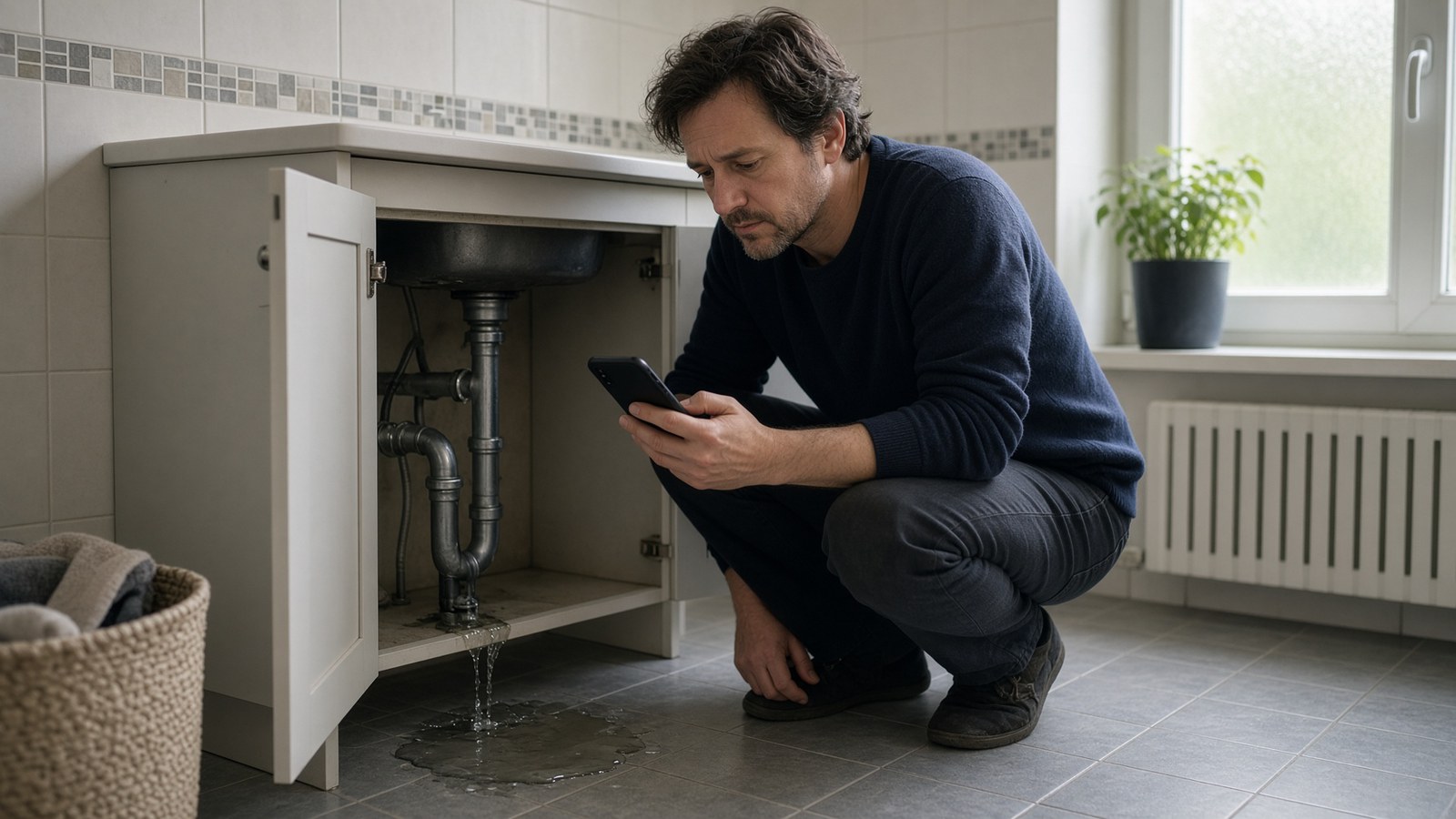
The decision is made in three minutes, standing up, on a phone. Nobody compares: they call the first one who answers and is nearby.
Plumbing, heating, electrics, locksmith, glazier, roadside assistance, towing. What decides it: the Google listing, the map, a number you can tap. The website mainly serves to reassure within two seconds.The comparison
The decision takes days or weeks. People request two or three quotes, read, compare, and look into who you are before writing to you.
Accountancy, lawyer, architect, property management, cleaning company, private school, translation agency, engineering firm. What decides it: the website. It's the only case where content, evidence and clarity on price genuinely do the work.Visible trust
The decision is made with the eyes, in a few minutes, often from a social network or a map. People look at photos, reviews, and want to book right away.
Restaurant, caterer, hairdresser, beauty salon, physiotherapist, dental practice, landscaper, photographer, gym. What decides it: real photos, recent reviews, and the ability to book without phoning.Many businesses belong to two families at once, and that's normal. A garage lives off the emergency when a car won't start, and off comparison when it comes to selling a used vehicle. What matters isn't fitting into a box, but knowing which share of your revenue comes from which path — because that's where the effort should go.
The gap almost nobody looks at
There's a recent, serious Swiss study on exactly this subject, and its figures deserve to be read slowly. It compares two things we're not used to placing side by side: what the population expects from SMEs online, and what SMEs actually offer .
The second bar is the one that interests us most, because it's counter-intuitive. Seven people in ten want to book online — and seven websites in a hundred allow it. In other words, the gap isn't about existing, it's about being able to act. A website that presents a physiotherapy practice beautifully but forces you to phone between 8am and 5pm doesn't lose a client over design: it loses them because the person was trying to book at 9.30pm.
The same study shows that 80% of people start with a search engine, but that 75% also go through a recommendation from someone close and 37% through a review platform. These channels don't compete, they add up: the recommendation gives a name, and the search checks that name. A business people speak well of but that has nothing to show online loses at the checking stage.
The five holes clients slip through
When we run an audit, it's almost always the same five, in the same order of frequency.
1. Existing without being on the map. The Google listing — the one showing your business on the right of the screen and on the map — is missing, incomplete, or worse: created automatically with wrong opening hours and an old address. For the whole "emergency" journey, it's the only ground that counts, and it's free. It's also the first place where a negative review stays visible for years if nobody replies to it.
2. A website where you can't do anything. The 77% versus 7% hole. No button to book, no short form, a number written out in full but not tappable from a phone. The visitor is convinced, and has nothing to do with their conviction.
3. Slow, or painful on mobile. Almost all these searches happen on a phone, often on a mediocre connection. A site that takes five seconds to appear has already lost part of its visitors before saying hello — and Google, which measures this, shows it less.
4. A site written for yourself, not for what people type. This is the most frequent case among businesses that have actually invested. The home page announces "a dynamic company committed to quality"; the client types "electric blind repair Lausanne". The two never meet. The trade's vocabulary isn't the client's, and it's the client's that decides.
5. Invisible to artificial intelligences. The newest hole — and the subject of the next section.
The rising channel: people also look for you inside AIs
Some people no longer type "best landscaper Nyon" into a search engine: they ask an assistant, in plain language, and get three names instead of ten links. It isn't the majority yet, but the trend is clear.
Again from the same Swiss study: 13% of the population already use an AI as their first reflex when looking for an SME's service, 19% have used one in the past twelve months, and that share rises to 26% among 18-29 year-olds. Above all, 78% of those who use it expect to use it more, and 40% of those who don't use it yet say they're ready to.
The practical difference matters. On a search engine, you appear in a list and the visitor chooses. In an AI's answer, you're cited — or you don't exist : there's no second page. And to be cited, you have to be understandable to a machine: clear, structured information, consistent between your website, your listing and your social profiles. A business whose address differs in three places won't be cited — not out of malice, but because nothing allows it to be identified with certainty.
The good news: that work doesn't require an advertising budget. It requires consistency. And it's exactly the kind of thing an audit spots in an hour.
Get my free audit →What order to tackle it in
The natural temptation is to do everything at once. That's the best way to spend a budget without ever knowing what worked. The journey is repaired in order, because a failed step makes the next one useless.
They look for you
The need exists. The person types a query, asks an AI, or hears your name.
Where it breaks: nobody searches for your trade using the words you use.They find you
You appear on the map, in the results, or in the assistant's answer.
Where it breaks: no listing, inconsistent information, site too slow.They contact you
The person calls, writes, or books a slot themselves.
Where it breaks: nothing to do on the site, form too long, reply too late.In practice, the order that works: first get the Google listing clean and consistent with everything else — it's free and often the most profitable. Then make sure people can act from the site: a button, a short form, a tappable number, ideally a booking. Only then write what clients actually search for. And paid advertising last, once the first three steps hold — otherwise it amplifies a leak instead of plugging it.
A telling detail from the same study: only 11% of Swiss SMEs invest in online advertising. That isn't necessarily a mistake. In most of the cases we see, there's a lot to gain beforehand, without spending a franc on ads. And when the time comes to spend some, you need to know what the machine expects: that's the subject of our article on how Meta's algorithm decides who sees your advertising.
Our real work: starting with what isn't billed
At Renova Softwork, the audit always comes before the proposal. Not out of commercial principle, but because we don't know what to sell you until we know where your journey leaks. And the conclusion regularly is: "you don't need to rebuild your website". You need a correct Google listing, twenty real photos, and a way to book. Three things that cost a fraction of a redesign.
We'd rather say it early. Selling a full redesign to a restaurant whose problem is that it doesn't appear on the map means winning a project and losing a client — and above all, leaving the problem untouched. It's the same logic as with the choice between a brochure site and a web app : the right question isn't "which is better", but "which changes something for you".
When a redesign is justified, on the other hand, we build it around the real journey: fast on mobile, written in your clients' words, and above all able to take an enquiry at 9.30pm. That's the point of our offers for digital marketing for SMEs, and of our website builds for those starting from scratch.

Frequently asked questions
I have a website but it brings me no clients. Should I rebuild it?
Not necessarily, and it's rarely the first thing to do. In most cases the leak is either before the site — people don't find you, because your Google listing is missing or inconsistent and your pages don't use the words your clients type — or after it: the visitor is convinced but can't do anything, for lack of a button, a short form or online booking. You have to identify the leaking step before starting a redesign, otherwise you pay for a new site that loses clients in exactly the same place.
Is the Google listing really important for a small business?
For trades chosen in an emergency — plumbing, electrics, locksmith, breakdown assistance — it's actually the main ground, more than the website. The listing shows your position on the map, your opening hours, your number and your reviews, and it's free. It's also the first place where wrong information does damage: an incorrect opening time or an old address cost you calls every day, without anyone telling you.
Do I really need to offer online booking?
According to the KMU Digital Pulse 2025 study by localsearch and the Lucerne University of Applied Sciences, 77% of the population want to book an appointment online with an SME, 56% treat it as a decisive selection criterion, and only 7% of the SME websites analysed allow it. So it's both a very widely shared expectation and an almost empty space. For appointment-based trades — physiotherapy, hairdressing, beauty salons, practices — it's often the most profitable improvement, because a large share of enquiries arrive in the evening and at weekends.
My clients find me by word of mouth. Do I need to be visible online?
Yes, and for a precise reason: the two channels work together. The recommendation gives your name, and the online search is used to check it. In the study cited, 75% of people rely on a recommendation from someone close and 80% go through a search engine — largely the same people. A business that comes recommended but can't be found online loses at the checking stage, often without ever knowing it.
Are AI assistants replacing Google search?
Not today, but the share is rising fast: 13% of the Swiss population already use an AI as their first reflex when looking for an SME's service, 19% have used one in the past twelve months, and 78% of those users expect to use it more. The important difference is that an AI names two or three businesses instead of showing a list: you're cited or you don't exist. To be cited, you need clear, consistent information across your site, your listing and your social profiles.
Where should I start on a small budget?
With what costs nothing or almost nothing, in this order: get the Google listing clean and consistent with everything else, make contact possible from a phone (tappable number, short form, online booking), then write the pages using the words your clients actually type. Paid advertising comes last: as long as one step of the journey leaks, it simply brings more people to a closed door.