


"I'd like an app like WhatsApp, at a fixed price, delivered in two weeks." It's a common request — and a perfectly legitimate one. The problem isn't the ambition: it's that no serious professional can answer honestly without first asking a simple question: what do you actually need?
The myth of the fixed price without a scope
Software isn't a finished product sitting on a shelf: it's an assembly of functions, and every function has a cost in design, development and testing.
Picture a supermarket trolley. You can fill it with own-brand products or with premium brands — and the total obviously won't be the same. Nobody expects to pay for a trolley full of premium brands at own-brand prices. Software works the same way: every feature is an item in the trolley, with its own level of demand and its own price. Asking "how much does it cost" without listing what's in the trolley is asking the price of the shopping before knowing what you're buying.
Rocket or small plane: what do you really need?
To get from A to B you don't always take a rocket. Sometimes a small plane is more than enough — it's quicker to get running, cheaper, and it meets the need perfectly. Other times you genuinely need a rocket, and trying to save on it will cost you more in the end.
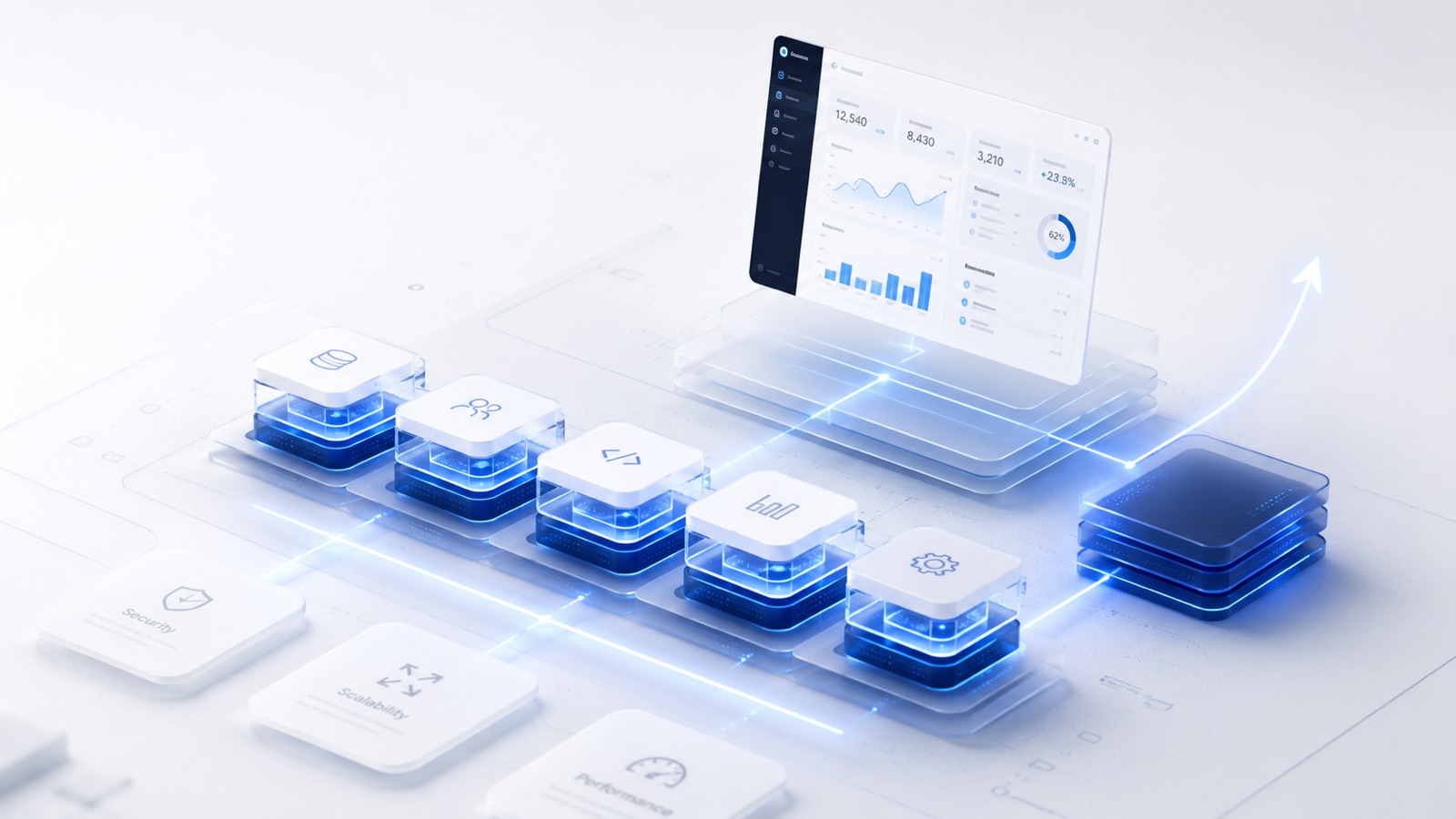
The point isn't having the biggest machine possible, but the right one. Here, very concretely, are the three sizes of a software project:
The small plane
- A handful of key features
- One or two user profiles
- Validate an idea, digitise a task
The airliner
- Several connected modules
- Roles and permissions
- Integrations (payment, email, API)
The rocket
- Full business core
- Multi-user, real time
- High security and scalability
What actually makes the time (and budget) vary
At equal scope, two projects can have very different timelines. The factors that weigh most:
- The number and complexity of features — a task list has nothing to do with an invoicing or scheduling module.
- Roles and permissions — "who is allowed to see and do what" multiplies the cases to handle.
- Integrations — payment, email, accounting, external APIs: every connection is a project of its own.
- Custom design — a unique interface takes more than a standard template.
- Security and compliance — personal data, nFADP/GDPR, backups: non-negotiable as soon as there's real data.
- Maintenance and scalability — building to last costs a little more upfront, and far less over time.
How long, concretely?
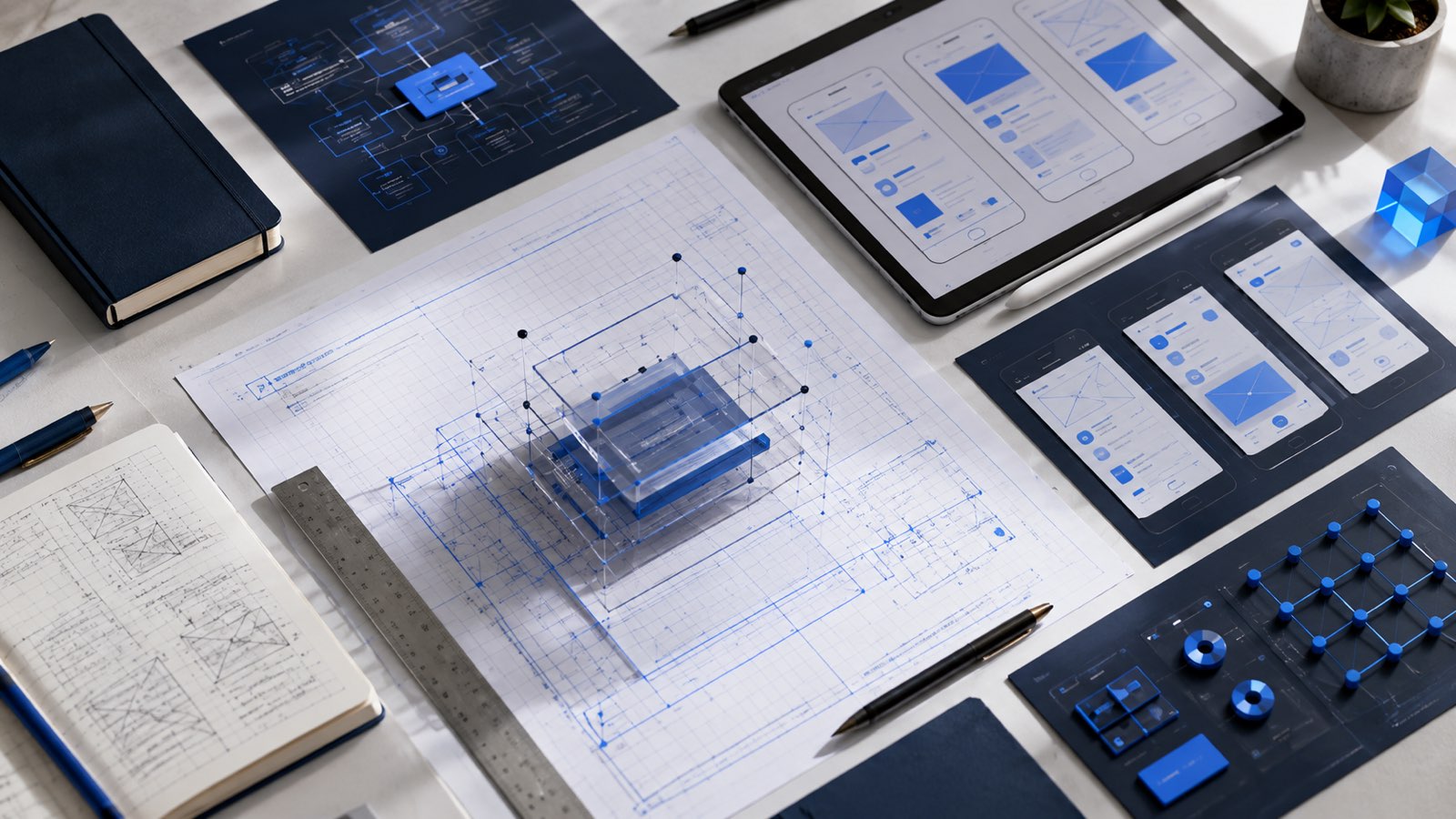
The ranges in the diagram above are honest orders of magnitude, not promises set in stone. A precise figure only makes sense after scoping — the moment we turn your need into a clear list of features.
That's also why, at Renova Softwork, custom projects are announced " from " an amount and then quoted properly: not to hide a price, but because an honest quote requires knowing what's being built. No surprises, in either direction.
Got a project in mind? Initial scoping exists precisely to answer "how long" and "how much" — with no commitment.
Discover the Custom package →AI can code, but it doesn't architect
Today, artificial intelligence easily generates small sites, bots or parts of a system in minutes. That's real, and it's impressive. But generating code isn't the same as designing software that lasts. The same nuance applies to conversational assistants, which we cover in our article on AI chatbots for SMEs.
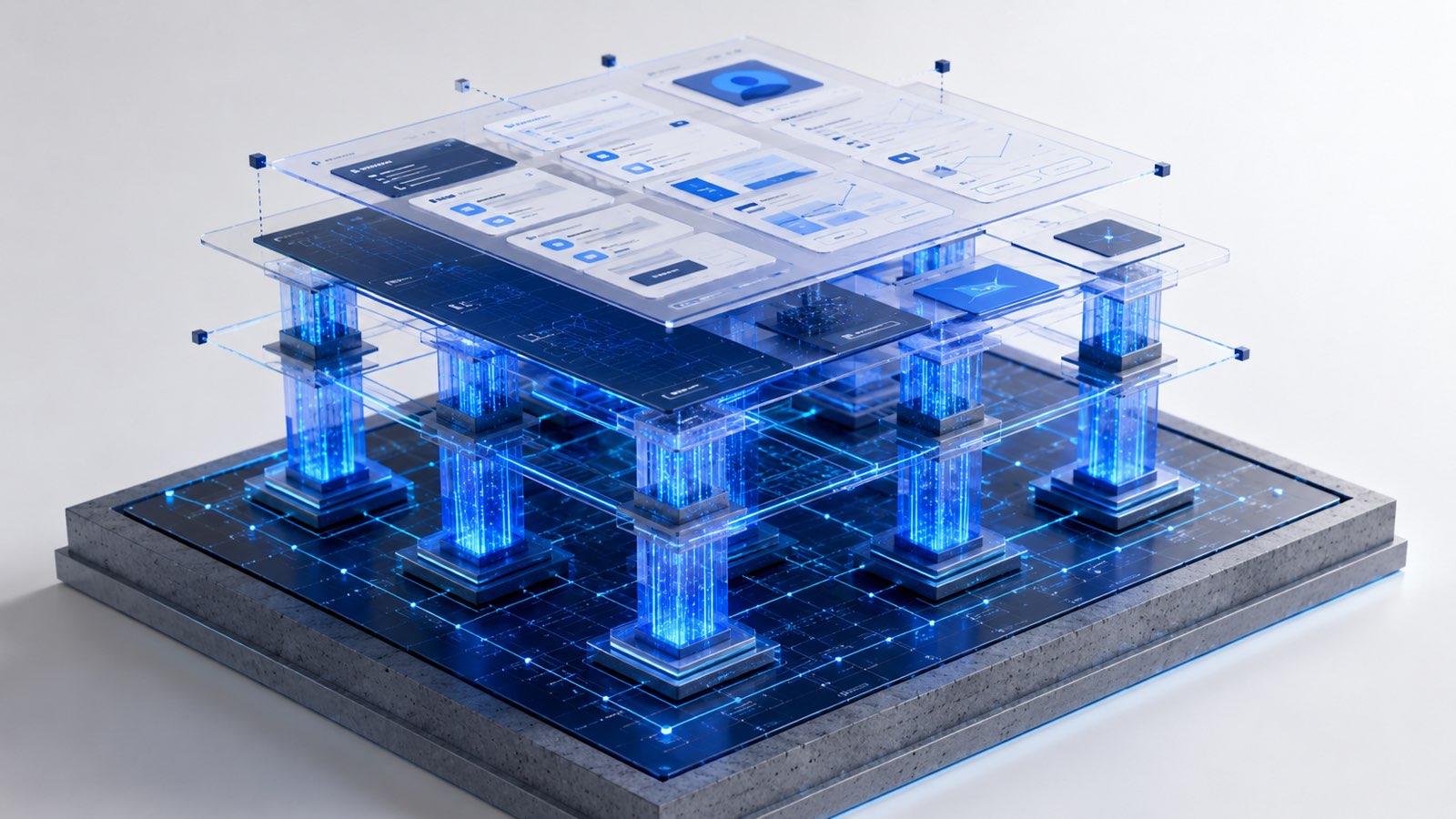
It's a bit like handing the structural drawings of your house to the site foreman rather than the architect or the engineer: he knows the ground perfectly and can lay walls — but long-term structural soundness, the load the structure will have to carry and the edge cases that only happen once in a hundred belong to another trade. AI produces what "works in the demo". Production software has to hold up with real traffic, edge cases and years of use.
It's the part you don't see… until the day it's missing.
Our real work: choosing the right machine
You'll have gathered by now: our job isn't to sell you the biggest rocket possible. It's knowing how to identify the one you need — the small plane when it's enough, the rocket when it's justified — then building foundations that hold. That's exactly the spirit of our approach to custom software : that scoping turns a vague idea into a clear, costed, realistic project.
Frequently asked questions
Why not give me a fixed price straight away?
Because a fixed price quoted without knowing the scope is either too high (padded for safety) or too low (and the surprises arrive along the way). Scoping lets us give you a reliable figure — and lets you decide with full knowledge.
How long for a simple mobile app?
For a focused app with a few key features, expect 3 to 8 weeks after scoping. The timeline depends mostly on integrations (payment, notifications, user accounts) and on the level of visual finish you want.
What's the difference between a website and a web application?
A website presents information (shop window, contact, search visibility). A web application makes the user work: accounts, data, actions, business logic. The latter demands real architecture — a project of a different nature, and a different budget.
Can we start small and grow later?
Yes, and it's often the best approach. We start with a useful "small plane" (an MVP), put it in the hands of real users, and grow it on foundations built for that. You invest at the pace of your real needs.
What costs the most in custom software?
Rarely what people think. It isn't the screens, it's the invisible logic: roles and permissions, integrations, security and robustness in edge cases. That's precisely what decides whether software lasts — or doesn't.